
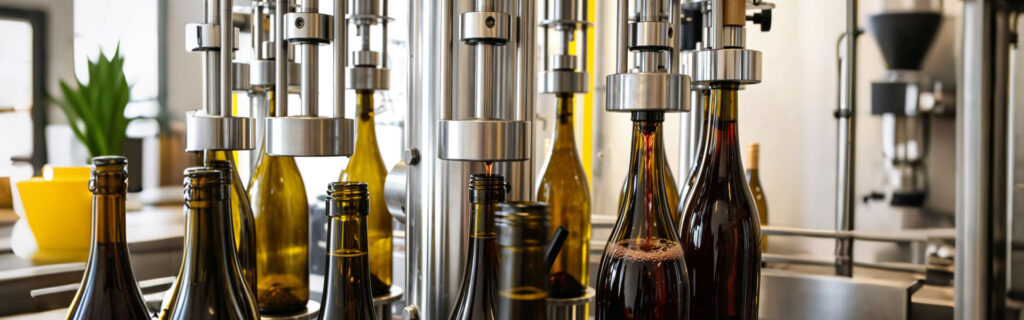
Core Production Steps of Wine & Fruit Wine
The six core processes
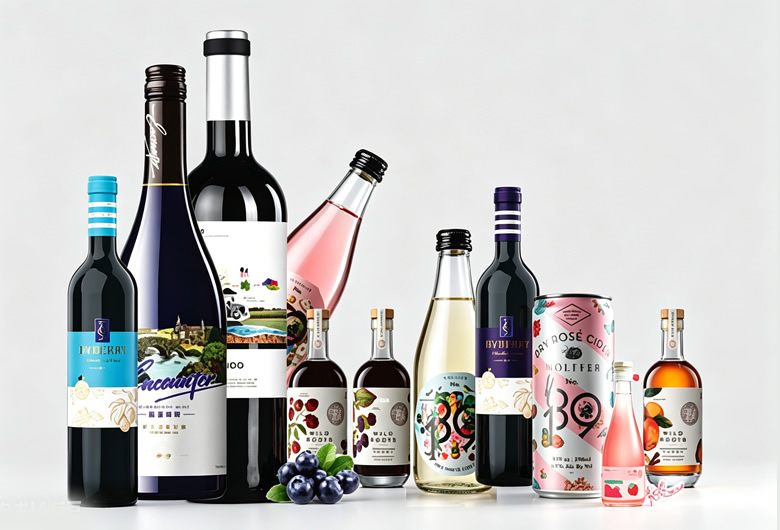
Custom Complete Solutions for All Types of Wine & Fruit Wine Products
From glass wine bottles, PET bottles, aluminum cans, stand-up pouches to bag-in-box containers, Zhonglian Machinery provides fully customized wine & fruit wine turnkey production lines. Suitable for grape wine, mulberry wine, plum wine, fruit liqueur and brandy, our integrated lines adopt constant-temperature fermentation, multi-stage aging, clarification stabilization and sterile filling tech to guarantee consistent wine quality, pure fruit aroma and long shelf life. Covering full workflows from fruit pretreatment, fermentation, blending to finished packaging, our stable high-efficiency equipment supports flexible switching of multiple packaging styles.
Comprehensive Advantages of the Production Line
- Wide Compatibility: One production line supports glass bottles, PET bottles, aluminum cans, stand-up pouches and other packaging formats, and easily switches between grape wine, mulberry wine, plum wine and other fruit wine products, with optional distillation units for brandy production.
- Controllable Quality: Fully enclosed production throughout the process. Precision temperature-controlled fermentation ensures stable alcohol content and flavor, and multi-stage clarification + cold stabilization technology ensures clear wine body and long shelf life without sediment.
- User-friendly Operation: Touchscreen human-machine interface with visual parameter adjustment, real-time monitoring of fermentation temperature, sugar content and other indicators, easy to master even for new operators. The system supports formula storage and one-click switching for multi-variety production.
- Flexible Capacity: Flexible equipment configuration to match small craft workshops and large-scale factories, with a wide range of capacity options from 500 to 24,000 bottles per hour to meet different investment scales.
- Convenient Maintenance: The food-grade stainless steel body is easy to clean and corrosion-resistant, with universal spare parts and low later maintenance cost. The fully matched CIP cleaning system ensures long-term hygienic and stable production operation.
Main Packaging Formats
The production line features strong compatibility and flexible switching between packaging formats, meeting demands of supermarkets, catering, retail and other market channels:

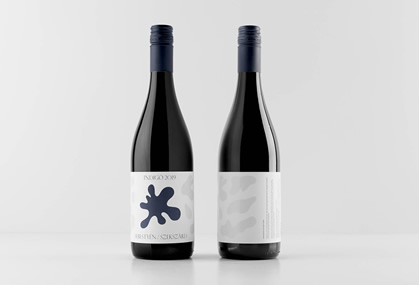
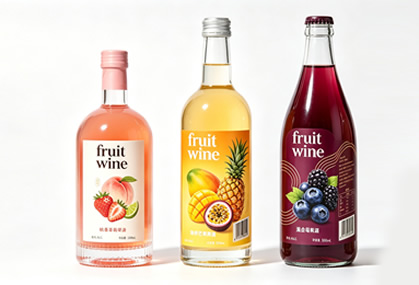
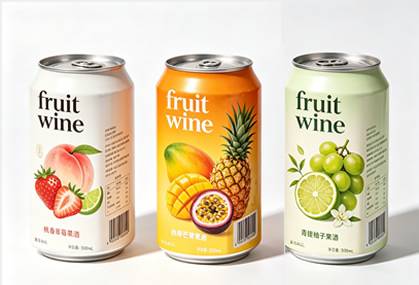
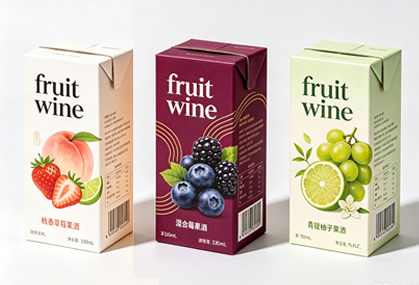
- Glass Bottles: The most classic and mainstream packaging for wine and fruit wine, covering 187ml, 375ml, 500ml, 750ml and other standard specifications. With excellent sealing performance and premium display effect, it matches corking and capsule shrinking equipment, with a capacity of 2,000 to 24,000 bottles per hour.
- Aluminum Cans: Portable and light-proof packaging, mainly for sparkling fruit wine and ready-to-drink fruit liqueurs, covering 250ml, 330ml specifications. Matched with high-speed can filling and seaming units, it features high automation and is suitable for high-volume standardized production.
- Bag-in-Box: Large-capacity aseptic packaging, covering 3L, 5L, 10L specifications. With long shelf life after opening, it is suitable for family sharing and catering channel bulk fruit wine products, matched with special aseptic bag filling equipment.
Wine & Fruit Wine Production Line & Production Process Guide
Wine and fruit wine products, represented by grape wine, mulberry wine, plum wine and fermented fruit liqueurs, feature natural fruit aroma, mellow taste and rich nutritional value, enjoying growing demand in the global healthy alcohol beverage market. Zhonglian Machinery supplies fully automatic wine and fruit wine production lines integrating raw fruit pre-treatment, temperature-controlled fermentation, aging, clarification, blending, sterilization, filling and packaging. With mature constant-temperature fermentation and multi-stage stabilization technology, the lines are compatible with multiple fruit raw materials and packaging formats, and cover capacities from small-batch craft brewing to large-scale commercial manufacturing, widely applied in mass production of various fruit wine and brandy products.
Wine & Fruit Wine Standard Production Process
Raw Fruit Materials → Crushing → Tank Charging → Ingredient Dosing → Primary Fermentation → Pomace Separation → Secondary Fermentation → 1st Racking → Sealed Aging for 2–3 Months → 2nd Racking → Full-tank Sealed Aging for 4–6 Months → 3rd Racking → Clarification Treatment → Filtration → Blending → Storage & Maturation for 1–3 Months → Fine Filtration → Bottling → Finished Products

The production of wine and fruit wine follows a rigorous staged fermentation and aging process. Selected raw fruits are first crushed and transferred into temperature-controlled fermentation tanks, dosed with specialized yeast and auxiliary ingredients for primary alcoholic fermentation.
After separating the wine liquid from fruit pomace and bottom lees, the liquid proceeds to secondary fermentation, followed by the first racking to remove precipitated impurities. The wine then goes through 2–3 months of sealed aging, after which a second racking is performed. It is then kept in fully sealed tanks for another 4–6 months of maturation, with a third racking to further purify the wine body.
Subsequently, the wine undergoes clarification treatment and multi-stage filtration, then is blended to standardize alcohol content, sugar-acid ratio and flavor profile. After 1–3 months of stabilized storage and a final fine filtration, the finished wine liquid is filled and sealed into containers to become final marketable products.
Core Production Process
The production line adopts the industry-standard staged fermentation + aging clarification process with compact workflow and full automatic control. Six core procedures ensure authentic fruit flavor, clear wine body and stable product quality:
1. Raw Fruit Pre-treatment & Juice Extraction
Qualified raw fruits (grapes, mulberries, plums, etc.) first go through floating washing to remove surface dirt and pesticide residues, then are manually sorted on the sorting platform to eliminate rotten, diseased and unqualified fruits. After crushing, destemming or destoning treatment, the materials are processed by professional juice extractors to separate raw juice from pomace, with adjustable crushing granularity to match different process requirements. Pectinase can be added as needed to improve juice yield and clarity. This step fully retains the natural sugar, fruit aroma and active ingredients of raw materials, laying the foundation for high-quality fermentation. For brandy production, the separated pomace can be sent to the distillation unit for secondary processing.
2. Temperature-Controlled Alcoholic Fermentation
The extracted raw juice is delivered to jacketed fermentation tanks, added with specially selected yeast, sugar and other auxiliary materials in precise proportions according to the product formula, and then enters the staged constant-temperature fermentation stage. The system strictly controls the fermentation temperature at 18–28℃ based on product type (18–22℃ for light fruit wine, 25–28℃ for red wine) to ensure stable yeast activity and full conversion of sugar into alcohol. During the main fermentation period, the system automatically monitors parameters such as sugar content, alcohol content and temperature, and completes the main fermentation within 7–10 days to form the base wine body and initial flavor framework.
3. Post-Fermentation & Aging Maturation
After the main fermentation, the wine liquid is separated from the bottom lees by pressure filtration, and then transferred to post-fermentation tanks for secondary fermentation to further stabilize the wine body and reduce residual sugar. After that, the wine is transferred to sealed aging tanks for long-term low-temperature aging, and regular racking (tank transfer) is carried out every 2–3 months to remove precipitated yeast mud and impurities. Through 2–6 months of aging, the wine taste becomes softer and mellower, the fruit aroma and wine aroma are more harmonious and layered. Optional oak barrel aging is available for high-end products to further enhance flavor complexity.
4. Clarification & Stabilization Treatment
The aged base wine first goes through fining treatment to precipitate macromolecular colloids and proteins, then passes through diatomaceous earth filtration for coarse clarification and membrane fine filtration to remove fine suspended solids and residual microorganisms. The system is also equipped with a cold stabilization unit, which cools the wine liquid to 0–5℃ and keeps it at constant temperature for a period of time to precipitate tartrate crystals, completely solving the problem of low-temperature precipitation during product circulation and ensuring long-term clear and translucent wine body.
5. Blending & Sterile Filtration
According to the product quality standard, the automatic blending system accurately adjusts the alcohol content, total sugar, total acid and other indicators of the wine liquid, and can add flavoring substances to meet the taste requirements of different products. The blending system supports formula storage and one-click switching, which is suitable for the production of multiple fruit wine varieties. Different from high-temperature sterilization for ordinary beverages, fruit wine adopts sterile membrane filtration technology, which removes harmful bacteria and spores at room temperature, maximally retaining the original fruit aroma and mellow taste of the wine without flavor damage.
6. Filling & End-of-Line Packaging
The sterile wine liquid is transported to the filling unit through fully enclosed aseptic pipelines, and the 3-in-1 monoblock machine completes bottle washing, constant-level filling and corking / screw capping in a closed environment. For glass bottled wine, an automatic capsule shrinking machine is equipped to complete bottle mouth sealing, ensuring tight sealing and avoiding secondary contamination. After filling and sealing, products enter the downstream packaging process: light inspection rejects defective products with abnormal liquid level, poor sealing or visible impurities; bottle surface air drying; date coding and self-adhesive labeling / sleeve labeling; finally, products are packed into cases and palletized, and stored in the warehouse after quality inspection.
Main Equipment & Performance Features
The entire production line is mainly made of food-grade 304/316 stainless steel, with corrosion resistance, no sanitary dead corners and easy cleaning. Core electrical and pneumatic components are sourced from internationally renowned brands. Equipped with a PLC control system and touchscreen operation interface, it achieves a high degree of automation. It is also fitted with comprehensive safety devices including overload protection, automatic stop upon bottle jamming and cap shortage detection for safe and stable equipment operation.
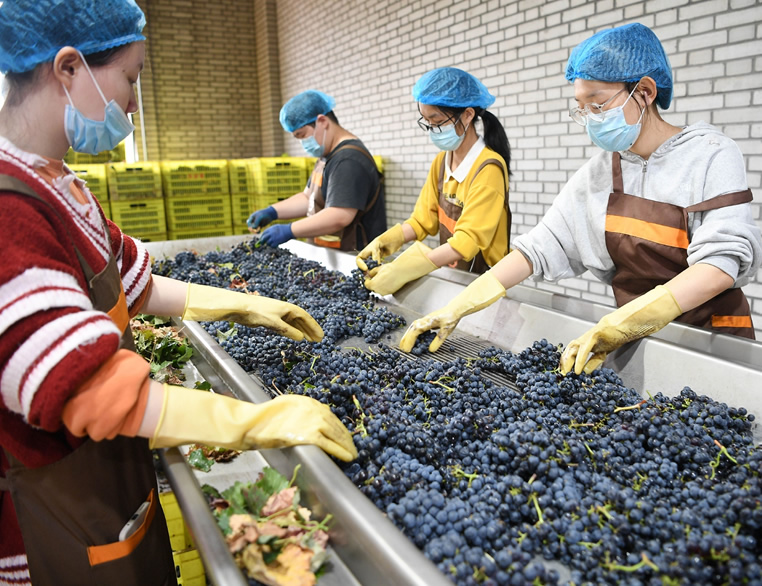
It consists of floating washers, fruit sorting platforms, crushers, destemmers/destoners, juice extractors and sanitary delivery pumps. The system completes fruit cleaning, sorting, crushing and juice extraction with adjustable granularity, and delivers high-quality raw juice for the subsequent fermentation process. Optional distillation units are available for brandy production.
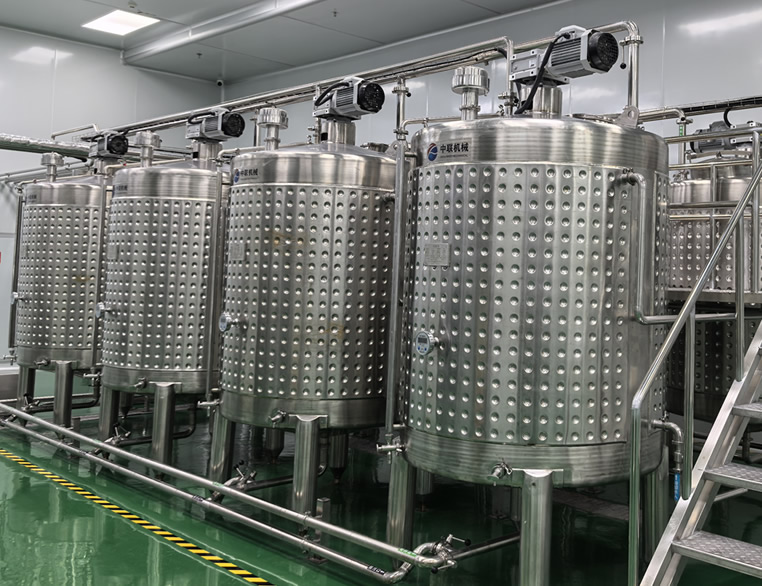
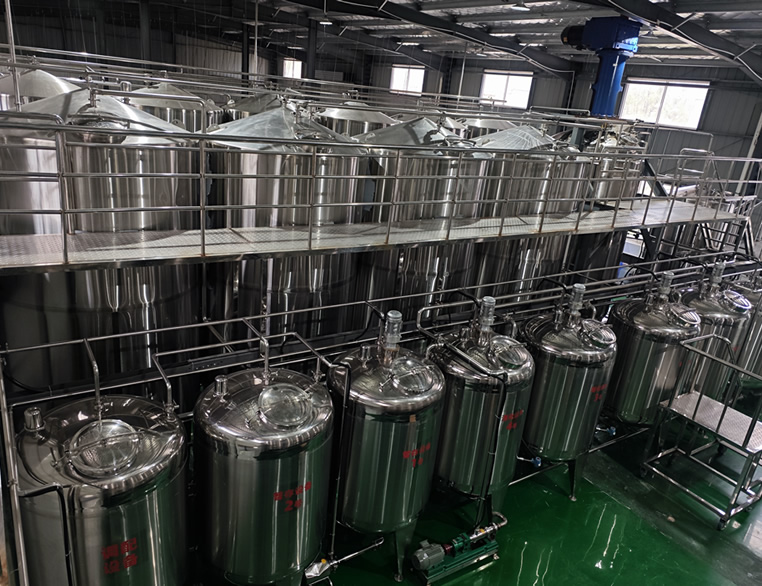
It consists of jacketed fermentation tanks, post-fermentation tanks, sealed aging storage tanks and automatic temperature control modules. The system realizes staged constant-temperature fermentation and sealed aging, with accurate real-time monitoring of fermentation parameters to ensure stable wine quality and layered, mellow flavor.
It consists of fining tanks, diatomaceous earth filters, membrane filtration units and cold stabilization cooling tanks. It completes multi-stage clarification and low-temperature stabilization treatment of wine liquid, ensuring long-term clear wine body without precipitation and stable product quality during circulation.
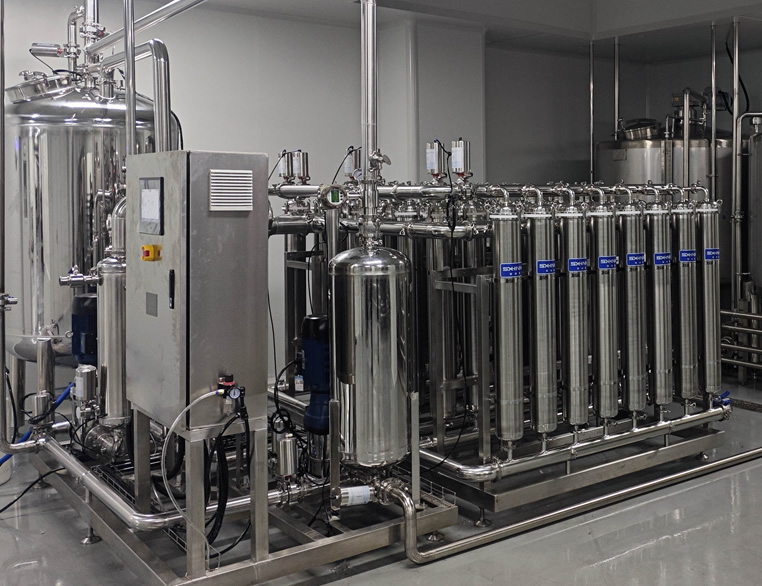
It consists of automatic blending tanks, duplex fine filters and sterile membrane filtration units. It completes precise formula blending and room-temperature sterile sterilization, ensuring accurate product indicators of alcohol, sugar and acid, and maximally retaining the original flavor of wine.
It consists of industrial water chillers, refrigerant storage tanks, circulating ice water pumps and supporting pipelines. It provides stable and precise cooling capacity for temperature-controlled fermentation, cold stabilization and low-temperature aging processes, ensuring stable fermentation efficiency and product quality.
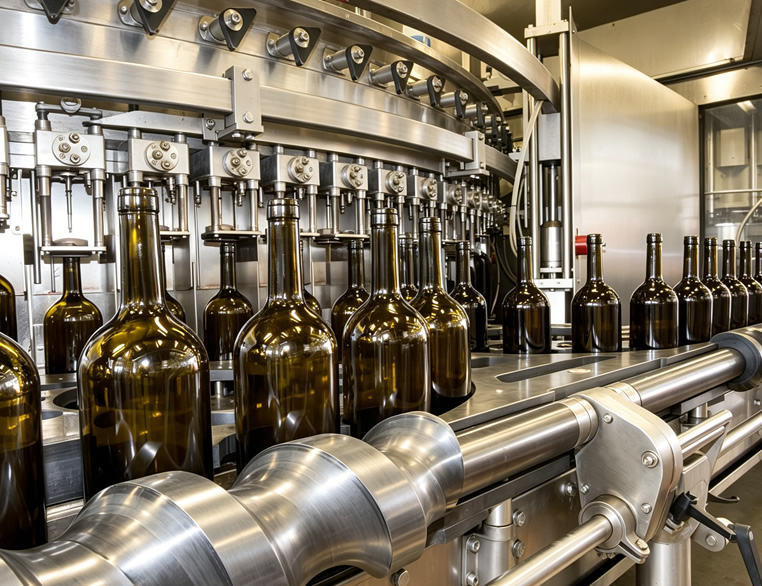
It integrates bottle rinsing, constant-level filling and corking / capping, with linear and rotary structures available in multiple configurable models. Equipped with automatic capsule shrinking machines for glass wine bottles, it completes fully enclosed filling and sealing to avoid secondary contamination and ensure product food safety.
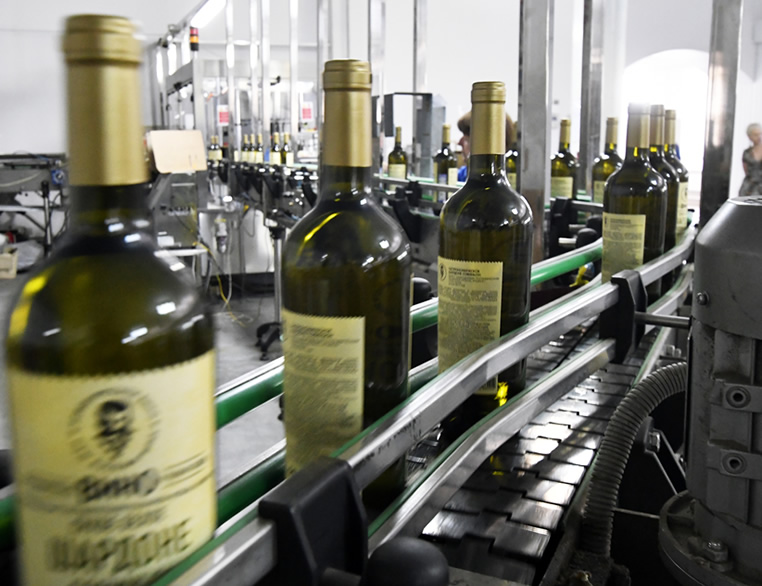
It includes light inspection equipment, bottle air dryers, inkjet / laser coders, self-adhesive labeling machines, fully automatic case packers and palletizers. The fully automatic workflow ensures neat packaging and clear product identification for finished wine and fruit wine products.
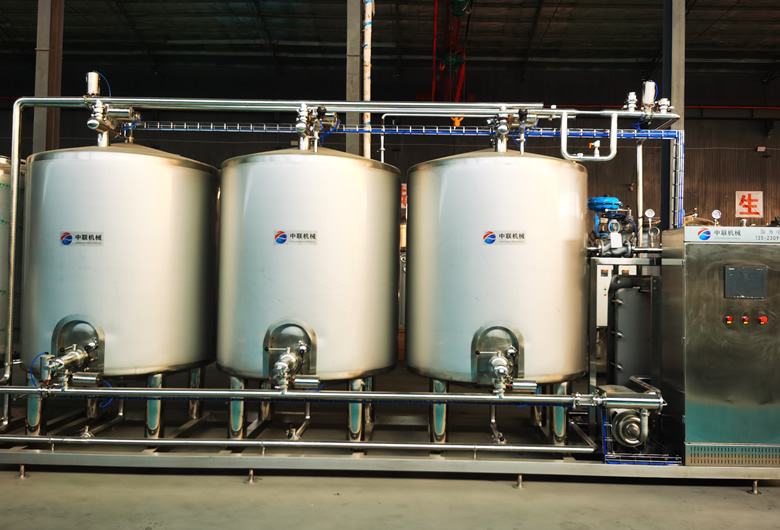
It performs full cleaning for all pipelines, tanks and equipment of the production line without disassembly, with automatic dosing and cycle control. It strictly meets the sanitary standards of the food and beverage industry and maintains long-term hygienic production conditions.
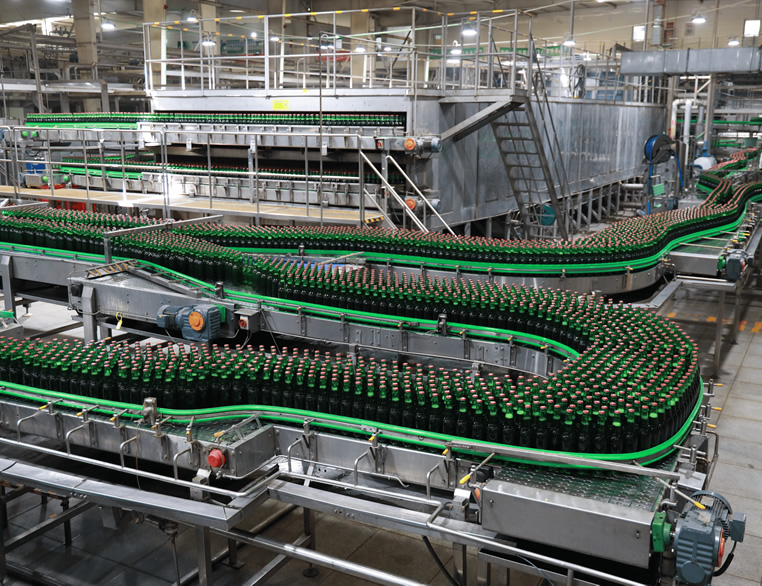
It includes sanitary product conveyors for semi-finished and finished products, covering transfer between all production sections. It realizes seamless and stable material delivery between processes and improves the overall operating efficiency of the line.
RELATED CASES
View All