Working Principle
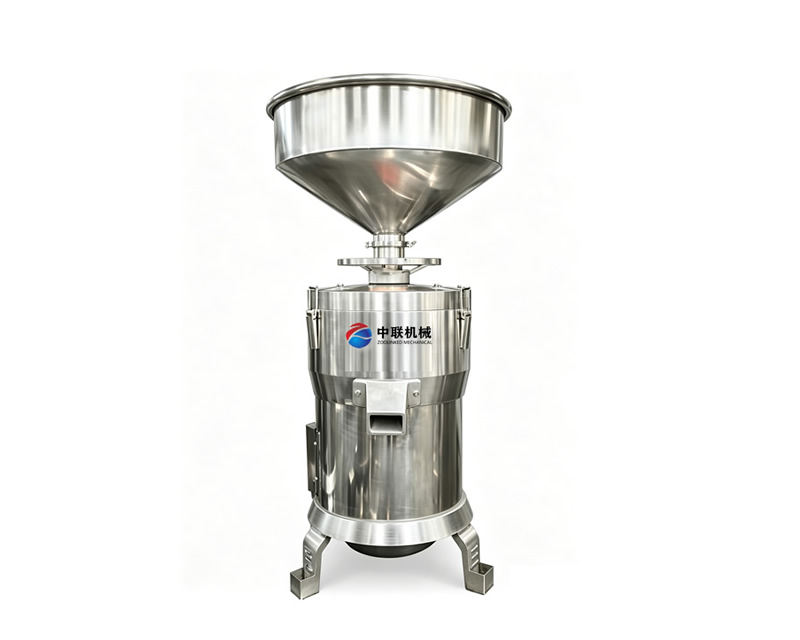
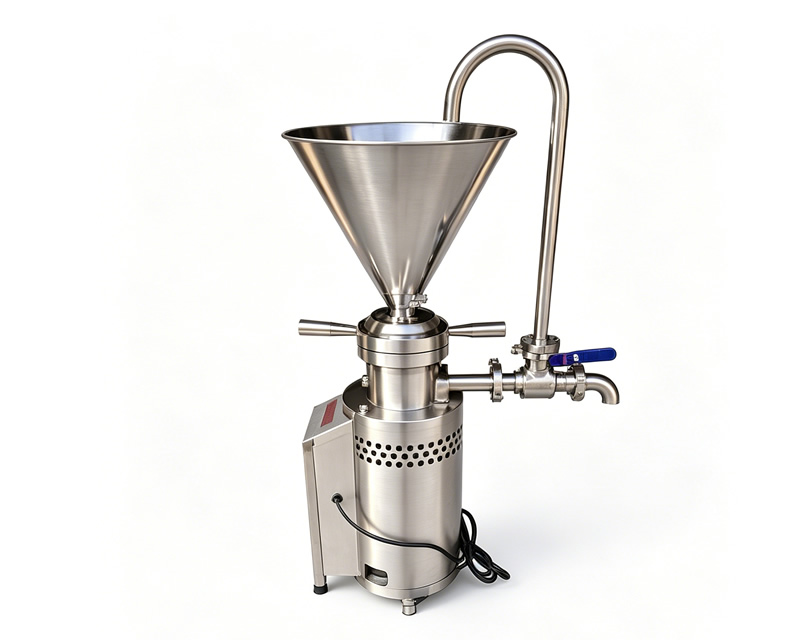
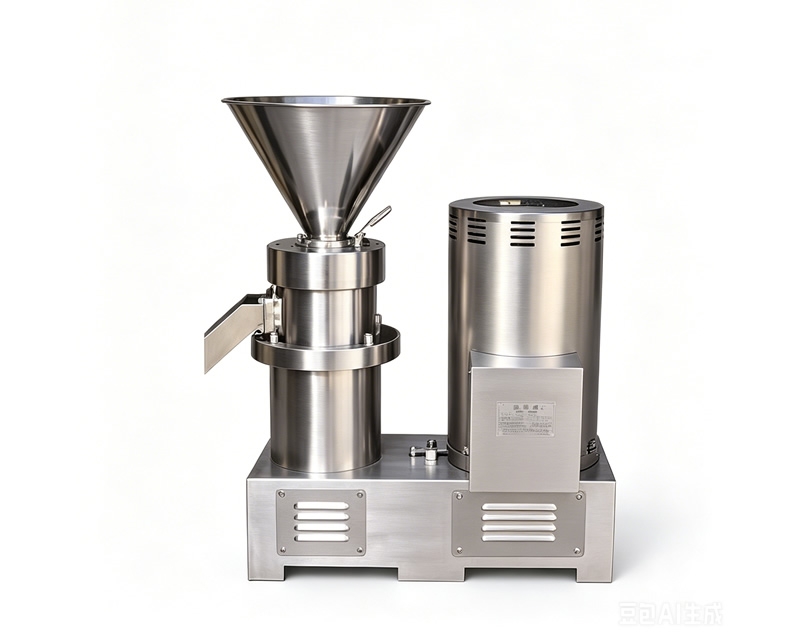
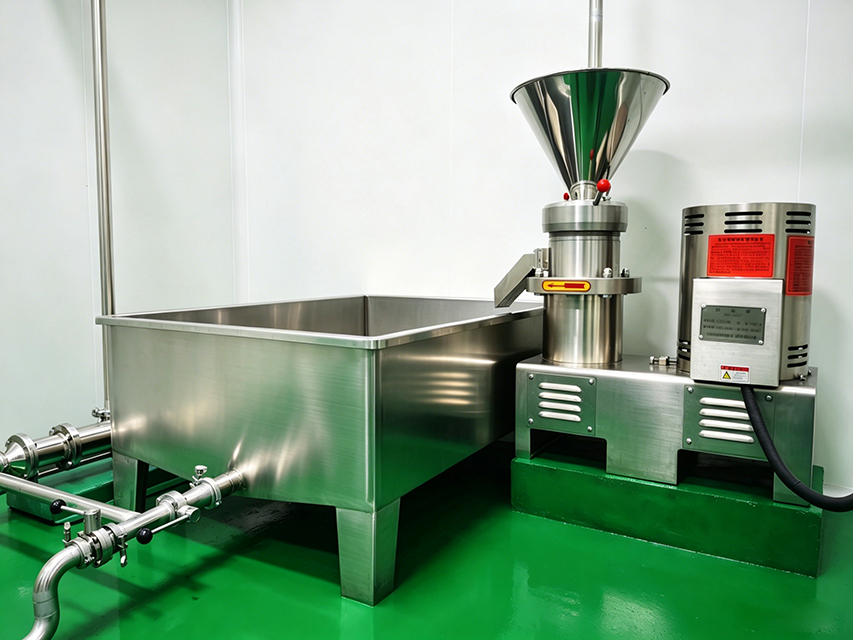
Materials enter the grinding chamber from the top hopper. Driven by the high-speed rotating rotor, they pass through the precise gap between the stator and rotor. Under centrifugal force, materials are subjected to intense shearing, friction, impact and turbulence. They are crushed step by step through multi-stage (3-stage, 4-stage, 5-stage) stator-rotor structures, with longer grinding path and more uniform refining effect.
Finally, the refined, emulsified and homogenized materials are discharged from the outlet. The processing fineness can be flexibly adjusted by changing the gap between stator and rotor.

Equipment Features
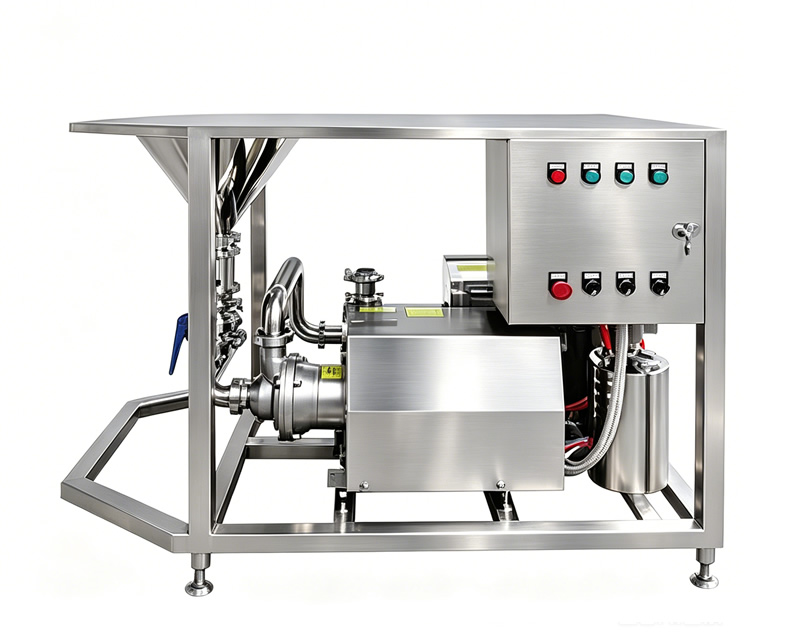
- Side-mounted motor, stable and easy to maintain The whole machine adopts side-mounted motor design for convenient maintenance, which also avoids the defect of motor burnout caused by direct connection in vertical colloid mills. The full stainless steel body is corrosion-resistant and easy to clean, complying with hygiene standards of food and pharmaceutical industries.
- High-precision wear-resistant stator and rotor The core working parts stator and rotor are precisely machined with high hardness and strong wear resistance, greatly extending service life and reducing long-term consumable and maintenance costs.
- Multi-stage grinding with adjustable fineness The stator and rotor are easy to disassemble, and the processing fineness can be flexibly adjusted. The multi-stage assembly structure extends material grinding duration and realizes step-by-step crushing, delivering more uniform and stable refining effect.
- Multiple tooth profiles available According to material characteristics and fineness requirements, stators and rotors with different materials and tooth profiles can be selected, including coarse tooth, fine tooth, sharp tooth, diamond tooth and spiral tooth, covering a wide range of options to adapt to different material processing demands.
Technical Parameters
表格
| Model | Processing Fineness (micron) | Output (T/H) | Motor Power (kw) | Motor Speed (rpm) | Overall Dimensions (cm) |
|---|---|---|---|---|---|
| JMS-50 | 2–50 | 0.02–0.05 | 1.5 | 2800 | 51×32×66 |
| JMS-80 | 2–50 | 0.07–0.5 | 4 | 2890 | 68×40×88 |
| JMS-110 | 2–50 | 0.5–1 | 7.5(5.5) | 2890 | 80×44×102 |
| JMS-130 | 2–50 | 1–2 | 11 | 2930 | 100×46×110 |
| JMS-160 | 2–50 | 2–3 | 15 | 2930 | 100×47×112 |
| JMS-180 | 2–50 | 3–5 | 18.5(22) | 2930 | 110×50×122 |
| JMS-200 | 2–50 | 4–6 | 22 | 2930 | 116×64×127 |
| JMS-220 | 2–50 | 5–8 | 30 | 2930 | 123×73×132 |
| JMS-240 | 2–50 | 10–12 | 37(55) | 2930 | 140×75×135 |
| JMS-300 | 2–50 | 15 | 55(75) | 2930 | 165×77×152 |
| JMS-400 | 2–50 | 20–30 | 90 | 2930 | 200×90×170 |
The above data is for reference only. Specific parameters can be adjusted according to actual material characteristics and production requirements. Specifications are subject to change without prior notice due to technical upgrading.
Application Fields
- Food industry: Grinding, emulsification and homogenization of jam, peanut butter, sesame paste, cream, soymilk, dairy products, syrup, condiments and other materials
- Pharmaceutical industry: Fine processing of ointments, emulsions, syrups, nutrient solutions, traditional Chinese medicine pastes and other pharmaceutical preparations
- Daily chemical industry: Homogenization and emulsification of toothpaste, facial cleanser, body wash, shampoo, skin care creams and other daily chemical products
- Chemical industry: Dispersion and grinding of coatings, paints, inks, adhesives, emulsified asphalt and other chemical materials
- Other industries: Ultra-fine processing of various fluid and semi-fluid materials in bioengineering, papermaking, pesticide and other industries