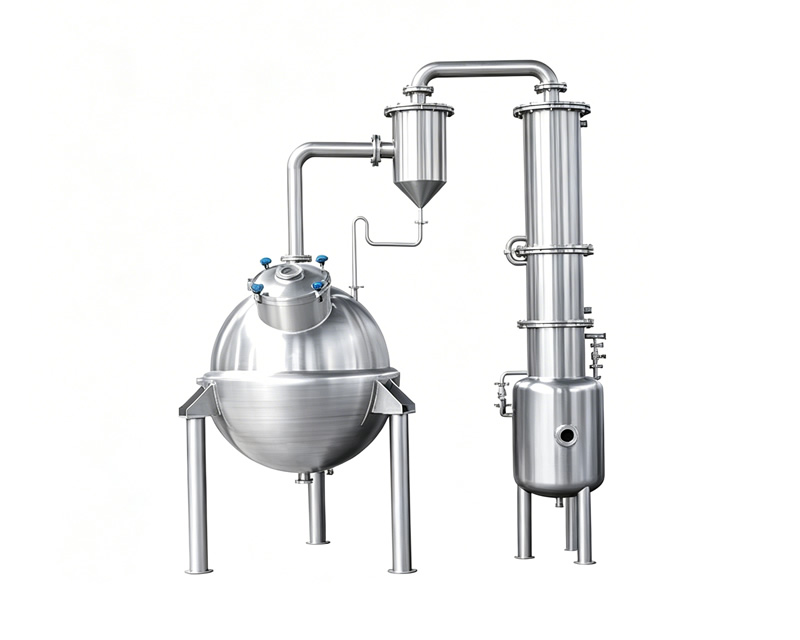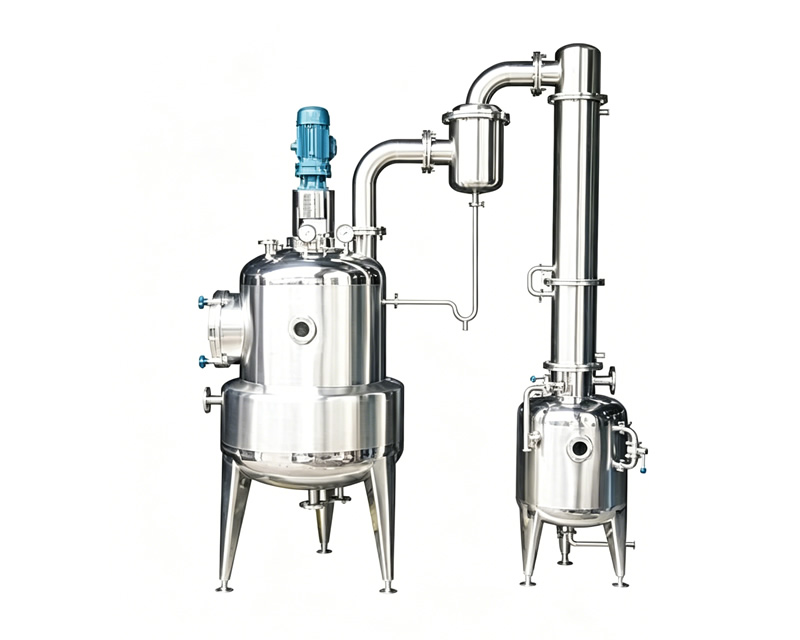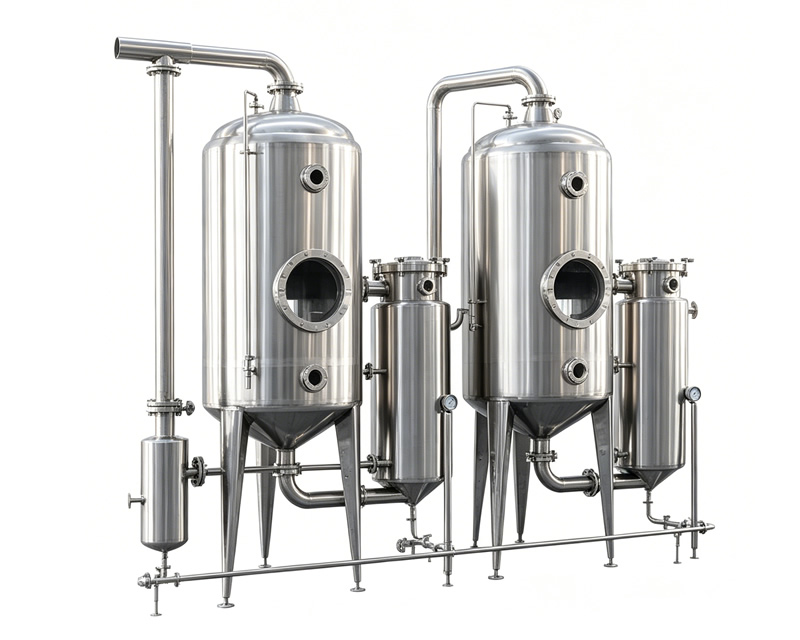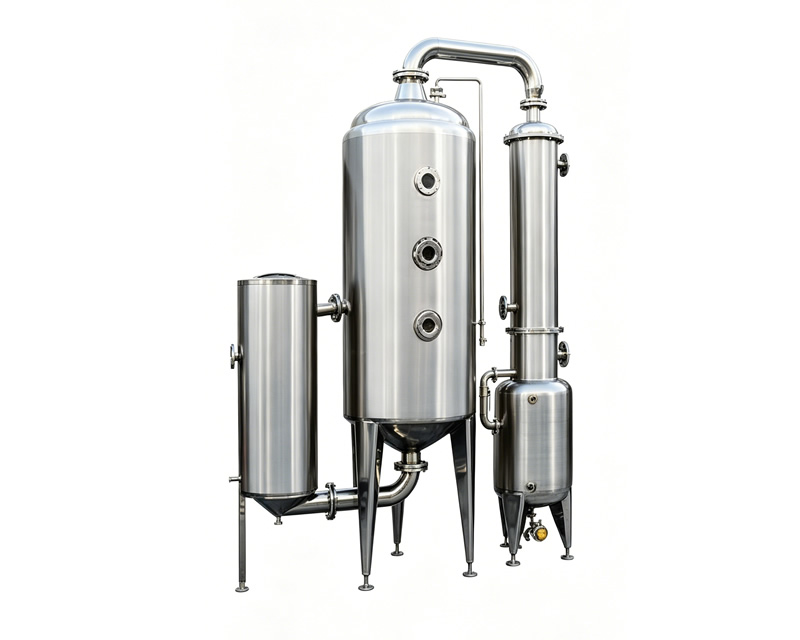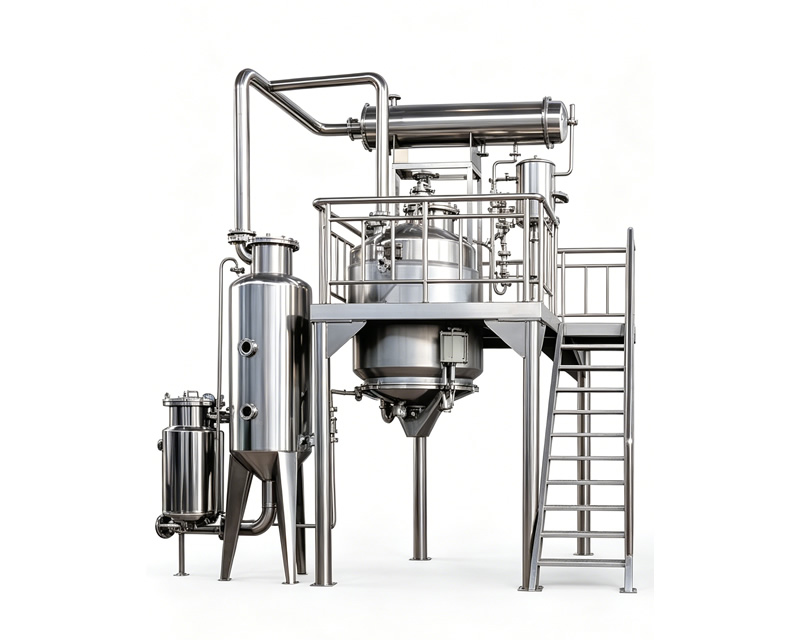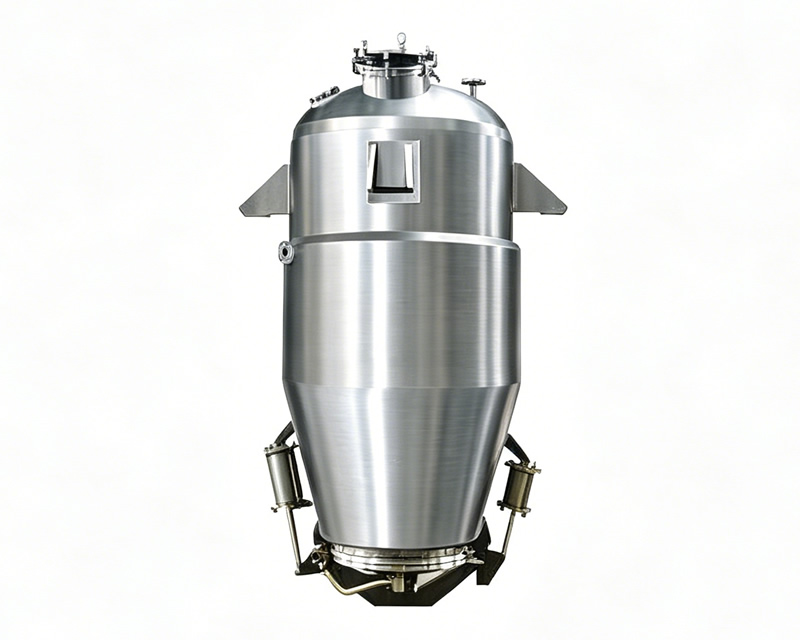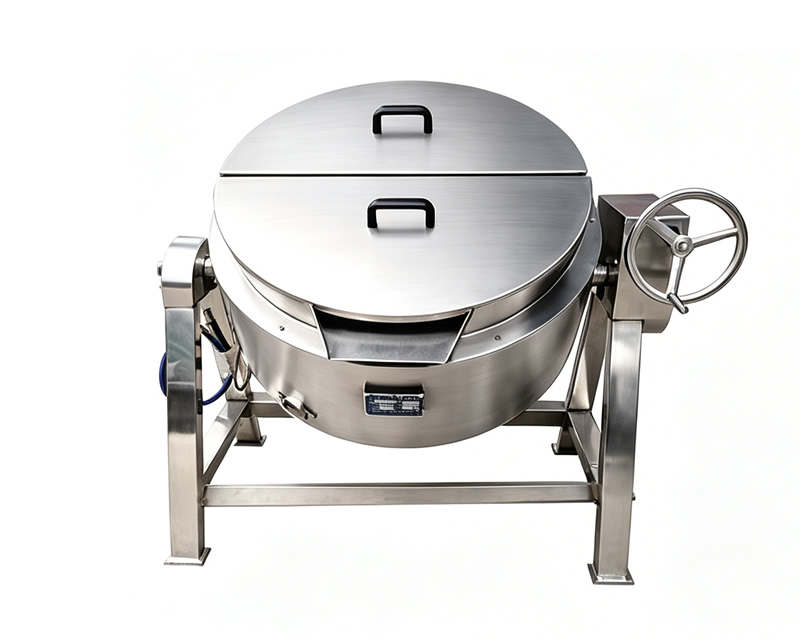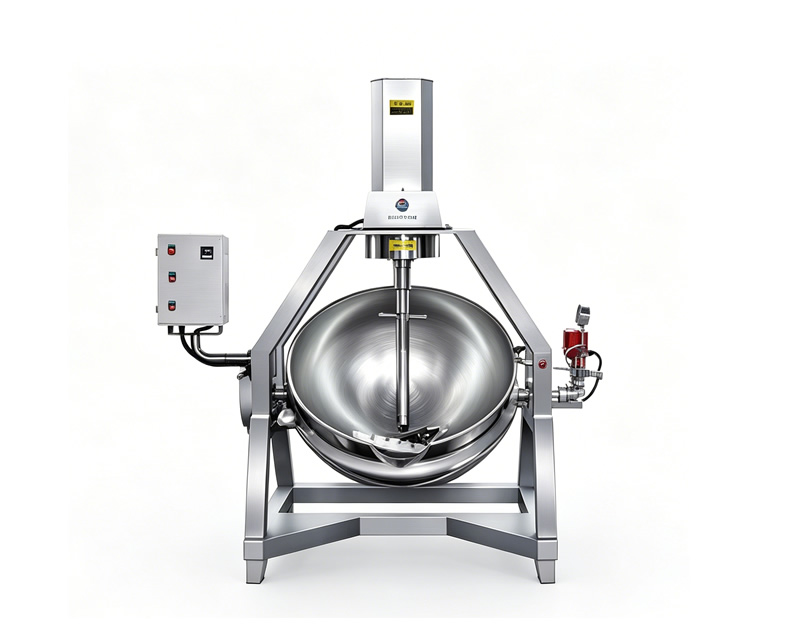
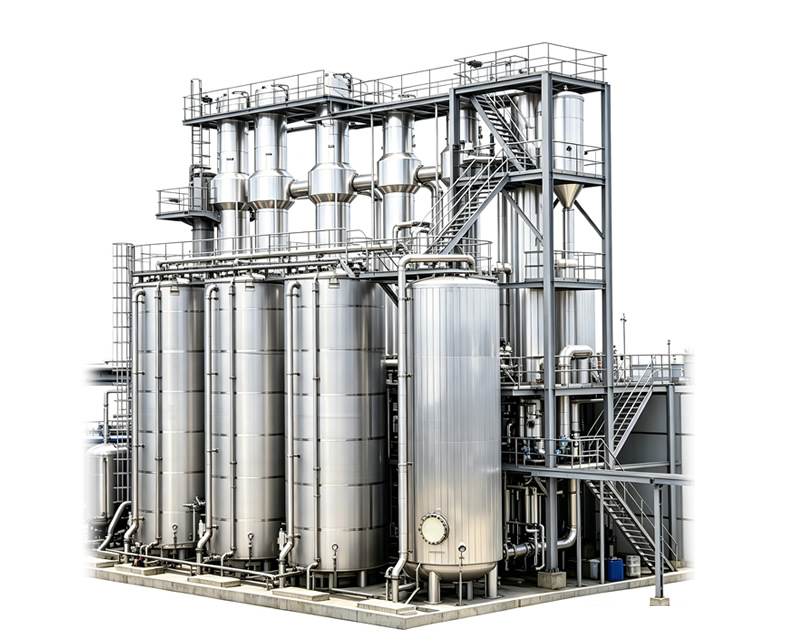
Equipment Features
- Multi-effect energy-saving structure Adopts multi-effect evaporation design, and the secondary steam from the previous effect is reused as heating source for the next effect. It greatly reduces steam and cooling water consumption, significantly cutting long-term operation cost compared with single-effect equipment.
- Short-time low-temperature evaporation Materials form a uniform thin film on the inner wall of heating tubes and evaporate rapidly. With extremely short heating residence time and low evaporation temperature, it effectively protects heat-sensitive active ingredients, flavor, color and nutrients of products.
- Continuous integrated operation Supports continuous feeding and discharging, and can integrate sterilization and concentration processes in one production line, which improves production efficiency and reduces intermediate contamination risks.
- Optimized film-forming design Precisely designed liquid distribution structure ensures uniform film formation on the inner wall of each heating tube, avoiding dry wall and coking, with stable concentration effect and high evaporation efficiency.
- Hygienic food-grade construction All material-contact parts are made of high-quality stainless steel, smooth and corrosion-resistant, easy to clean and maintain, fully complying with food and pharmaceutical GMP production standards.
- Flexible configuration options Available in different effect stages and capacity specifications, with customizable configurations to match various production scales and material process requirements.
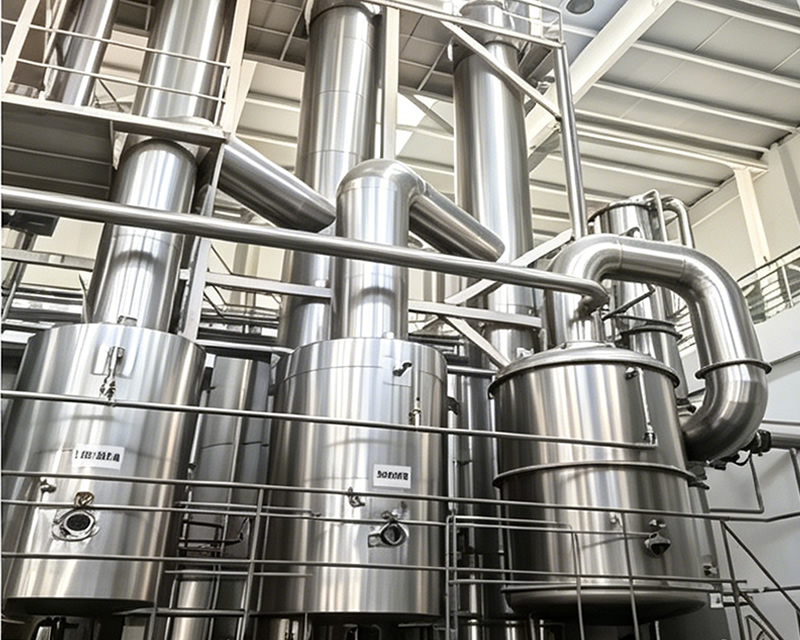
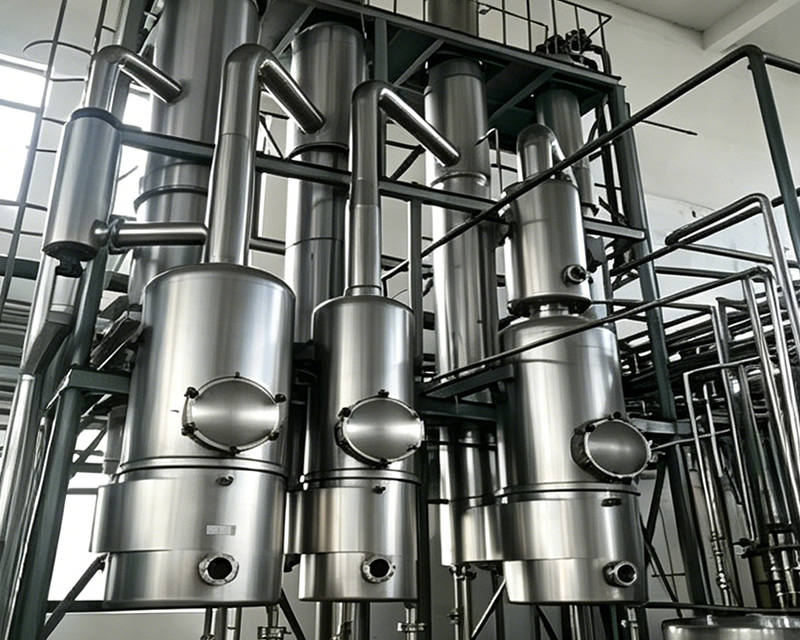
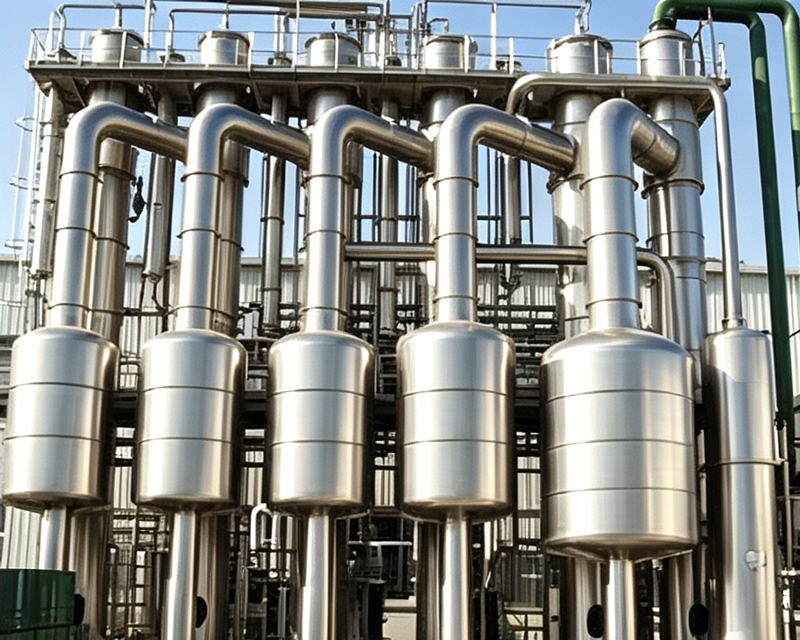
Working Principle
Materials are evenly distributed into each heating tube and form a continuous thin film flowing down along the inner wall. Heated by steam outside the tubes, the material film evaporates rapidly at low temperature under vacuum condition.
In multi-effect configuration, the secondary steam generated from the first effect is delivered to the second effect as its heating medium, and so on for subsequent effects. This cascade utilization of steam energy greatly improves thermal efficiency and reduces energy consumption. Materials pass through each effect stage quickly with very short heating residence time, which maximally preserves active ingredients, flavor and nutritional value of heat-sensitive products.
Technical Parameters
Table 1. Small Capacity Models
| Items | PLONS-30 | PLCNS-600 | PLONS-700 | PLCNS-1250 |
|---|---|---|---|---|
| Water Evaporation Capacity (kg/h) | 30 | 600 | 700 | 1250 |
| Material Processing Capacity | 40 | 800 | 940 | 1680 |
| Feed Concentration (%) | 11.5 | 11.5 | 11.5 | 11.5 |
| Discharge Concentration (%) | 45–48 | 45–48 | 45–48 | 45–48 |
| 1st Effect Evaporation Temp. (℃) | 68–72 | 68–72 | 68–72 | 68–72 |
| 2nd Effect Evaporation Temp. (℃) | — | — | 45–52 | 45–52 |
| 3rd Effect Evaporation Temp. (℃) | — | — | — | — |
| 4th Effect Evaporation Temp. (℃) | — | — | — | — |
| Steam Consumption (kg/h) | 17 | 410 | 280 | 500 |
| Cooling Water Consumption (t/h, 16℃ in / 40℃ out) | 5 | 7.2 | 5 | 9 |
| Overall Dimensions (m) | 3×1.5×4.8 | 5×2×8 | 5×2.5×8.5 | 5.5×3×8.5 |
Table 2. Medium Capacity Models
| Items | PLONS-2000 | PLONS-2500 | PLONS-3000 | PLONS-3200 |
|---|---|---|---|---|
| Water Evaporation Capacity (kg/h) | 2000 | 2500 | 3000 | 3200 |
| Material Processing Capacity | 2688 | 3360 | 4032 | 4300 |
| Feed Concentration (%) | 11.5 | 11.5 | 11.5 | 11.5 |
| Discharge Concentration (%) | 45–48 | 45–48 | 45–48 | 45–48 |
| 1st Effect Evaporation Temp. (℃) | 68–72 | 68–72 | 68–72 | 68–72 |
| 2nd Effect Evaporation Temp. (℃) | 45–52 | 45–52 | 45–52 | 55–60 |
| 3rd Effect Evaporation Temp. (℃) | — | — | — | 44–48 |
| 4th Effect Evaporation Temp. (℃) | — | — | — | — |
| Steam Consumption (kg/h) | 800 | 1000 | 1200 | 900 |
| Cooling Water Consumption (t/h, 16℃ in / 40℃ out) | 14 | 18 | 21 | 20 |
| Overall Dimensions (m) | 5.5×3×8.5 | 5.5×4×11 | 5×3.5×11 | 6.5×4×11 |
Table 3. Large Capacity Models
| Items | PLONS-5000 | PLCNS-6400 | PLCNS-8000 | PLONS-10000 |
|---|---|---|---|---|
| Water Evaporation Capacity (kg/h) | 5000 | 6400 | 8000 | 10000 |
| Material Processing Capacity | 6720 | 8500 | 10000 | 13800 |
| Feed Concentration (%) | 11.5 | 11.5 | 11.5 | 11.5 |
| Discharge Concentration (%) | 45–48 | 45–48 | 45–48 | 45–48 |
| 1st Effect Evaporation Temp. (℃) | 68–72 | 68–72 | 68–72 | 68–72 |
| 2nd Effect Evaporation Temp. (℃) | 55–60 | 55–60 | 55–60 | 55–60 |
| 3rd Effect Evaporation Temp. (℃) | 44–48 | 44–48 | 55–64 | 44–48 |
| 4th Effect Evaporation Temp. (℃) | — | — | 44–48 | — |
| Steam Consumption (kg/h) | 1400 | 1700 | 1760 | 3080 |
| Cooling Water Consumption (t/h, 16℃ in / 40℃ out) | 32 | 40 | 32 | 55 |
| Overall Dimensions (m) | 7.3×4×12 | 7.3×4×12 | 9.3×4×12 | 11.5×5×13 |
Note: Some data in the original datasheet has typesetting deviation. The above parameters are sorted out according to technical logic for reference only. Specific specifications can be fully customized according to actual production requirements.
Application Fields
- Pharmaceutical industry: Concentration of traditional Chinese medicine decoction, western medicine liquid, herbal extracts and pharmaceutical intermediates
- Food & dairy industry: Concentration of milk, dairy products, glucose, starch sugar, monosodium glutamate, fruit juice and other food liquid materials
- Chemical industry: Concentration of chemical solutions, fine chemical products and wastewater treatment evaporation processes
- Other industries: Low-temperature vacuum concentration of various heat-sensitive liquid materials in biological engineering, food additives and related industries