Complete Preparation Plan for Packaged Drinking Water Production Project

A Turnkey Guide to Site Selection, Water Source, Equipment, Budget & Automation Configuration

Introduction

Driven by rising global health awareness and growing demand for safe drinking water, the packaged drinking water market maintains steady growth and remains one of the most stable investment tracks in the beverage industry. However, a successful water bottling project relies on systematic pre-planning — improper site selection, mismatched water treatment processes or overestimated capacity will directly lead to cost overruns and extended payback periods.

Based on over 15 years of turnkey project experience, Zhonglian Machinery has compiled this full-cycle preparation guide, covering all core links from factory site selection, water source matching, equipment configuration to budget estimation. It is applicable to purified water, natural mineral water and large-barrel drinking water projects of all scales, helping investors build efficient, compliant and cost-effective production lines.


1. Project Positioning & Planning Principles

Before launching the project, it is necessary to clarify the product positioning and capacity scale based on local market demand and channel resources, so as to avoid blind investment:

  • Entry-level startup: Target regional distribution and catering channels, with small-capacity lines as the core, prioritizing low investment and fast launch.
  • Medium-scale operation: Cover supermarket and retail channels, configure fully automatic lines to ensure stable output and standardized quality.
  • Large-scale production: Layout regional market, build high-speed intelligent lines, support multi-specification and multi-category flexible production.

The core planning principle is: capacity matches demand, process matches water source, automation matches labor cost, to maximize the return on investment.


2. Factory Site Selection & Plant Layout

2.1 Core Criteria for Site Selection

  1. Water source accessibility: For natural mineral water / groundwater projects, the plant must be built close to the water source to reduce water transmission costs and secondary pollution risks; for purified water projects using municipal water supply, priority should be given to areas with stable water and electricity supply.
  2. Logistics & transportation: Close to main roads and logistics hubs, convenient for incoming raw materials (preforms, caps, labels) and outgoing finished products, reducing logistics costs.
  3. Environmental hygiene: The site must be far away from pollution sources such as chemical plants, garbage dumps and livestock farms, and meet the environmental requirements of food production to avoid microbial and odor pollution.
  4. Municipal supporting facilities: Sufficient power capacity, stable water supply, and complete sewage discharge and fire protection facilities to meet the needs of long-term production operation.
  5. Policy compliance: Located in an industrial park with complete industrial and commercial planning, and smoothly handle food production license, environmental assessment and other formalities.

2.2 Plant Area & Functional Zoning

Line ScaleHourly CapacityRecommended Plant AreaCore Requirements
Small-scale2,000 – 4,000 bottles800 – 1,200 ㎡Clear height ≥ 4m, load-bearing ≥ 5t/㎡, independent raw material and finished product warehouse
Medium-scale6,000 – 12,000 bottles1,500 – 2,500 ㎡Set up independent quality inspection room, CIP cleaning room and power distribution room
Large-scale18,000 – 36,000 bottles3,000 – 5,000 ㎡Reserve expansion space, configure automated three-dimensional warehouse

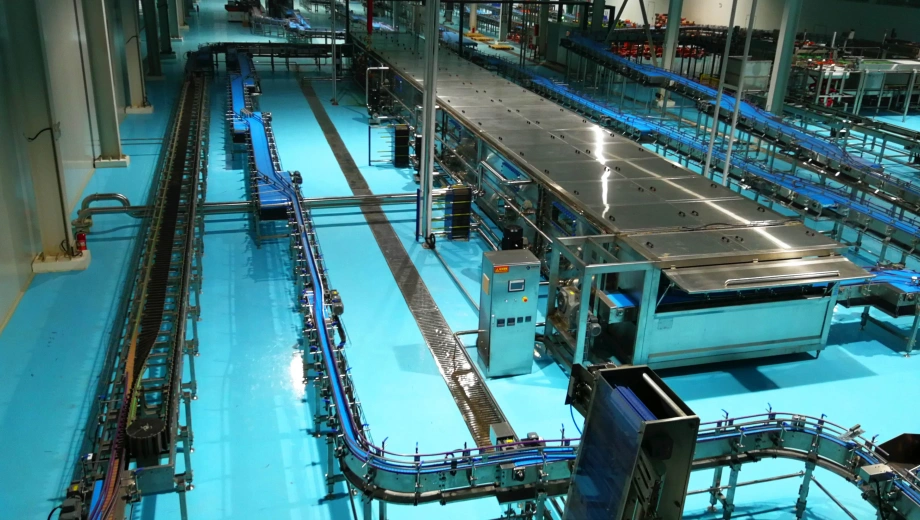
The plant shall be designed in strict accordance with the food GMP process flow: raw material warehouse → water treatment workshop → filling production workshop → packaging workshop → finished product warehouse, with one-way flow to avoid cross-contamination.


3. Water Source Selection & Quality Standards

Water source is the core foundation of product quality, and different water sources correspond to completely different treatment processes and product positioning.

3.1 Three Main Water Source Solutions

  1. Municipal Tap Water
    • Advantages: Stable water quality, complete pipeline supporting facilities, no need for water intake approval, and low early investment.
    • Applicable scenarios: Urban purified water projects, small and medium-sized startup plants.
    • Matching process: Multi-stage pre-filtration + reverse osmosis (RO) + UV / ozone sterilization, to produce pure water that fully meets drinking water standards.
  2. Groundwater / Well Water
    • Advantages: Low long-term water cost, stable water temperature, and good taste of product water.
    • Key notes: Water quality testing must be done in advance. For water with high hardness and heavy metal content, softener and heavy metal removal devices need to be added.
    • Applicable scenarios: Suburban and county-level plants, medium and large-scale purified water projects.
  3. Natural Spring / Mineral Water
    • Advantages: High product premium, strong product competitiveness, and obvious differentiation from ordinary purified water.
    • Key notes: Need to apply for water mining right and mineral water qualification, with long approval cycle; the process shall retain beneficial minerals, and ultrafiltration + sterilization process is adopted instead of RO reverse osmosis.
    • Applicable scenarios: Mid-to-high-end brand projects with high-quality water source resources.

3.2 Quality Compliance Requirements

All finished water must meet the WHO Drinking Water Quality Guidelines and local food safety regulatory standards. Key indicators such as TDS, total bacterial count, heavy metal content and pH value shall be tested regularly to ensure stable product quality.


4. Core Equipment Procurement Configuration

A complete packaged drinking water production line consists of four major systems. The configuration can be flexibly adjusted according to capacity and automation requirements.

4.1 Water Treatment System (Core Quality Link)

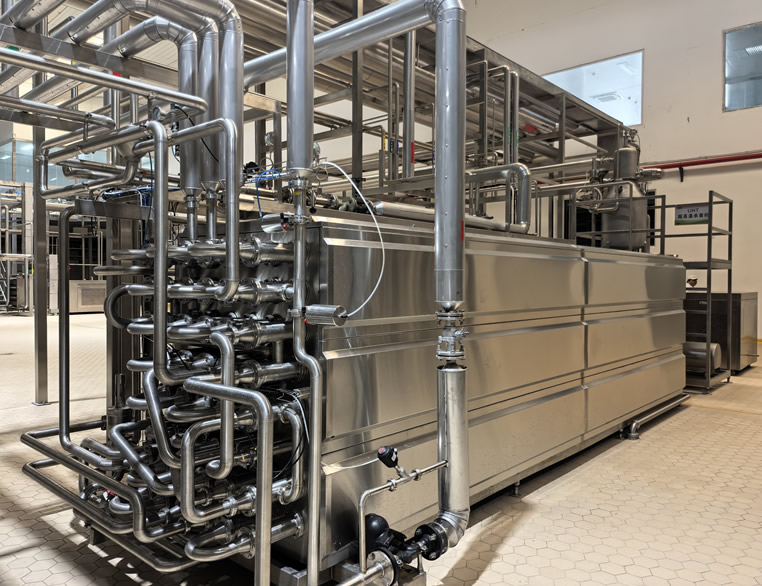
It is composed of quartz sand filter, activated carbon filter, softener, precision filter, reverse osmosis (RO) unit, UV sterilizer and ozone sterilizer. It removes sediment, residual chlorine, heavy metals, bacteria and other impurities in raw water step by step, and is the core guarantee of product water quality.

  • For mineral water projects, the RO unit is replaced with an ultrafiltration system to retain natural mineral components.

4.2 Main Filling System

The 3-in-1 rinsing-filling-capping monoblock is the core of the whole line, which completes bottle rinsing, constant-level filling and screw capping in a fully enclosed environment, avoiding secondary pollution. It is equipped with high-precision filling valves to ensure accurate liquid level and no water splash.

  • Optional automatic bottle blowing machine: Produce PET bottles online from preforms, reducing packaging material storage and transportation costs.

4.3 End-of-Line Packaging System

It includes inkjet coder, sleeve labeling / self-adhesive labeling machine, automatic shrink wrapper, case packer and palletizer. It completes date marking, labeling, collective packaging and palletizing of finished products in sequence, with fully automatic operation.

4.4 Auxiliary Supporting Systems

  • CIP cleaning system: Realize automatic cleaning of pipelines and tanks without disassembly, meeting food hygiene standards.
  • Air compressor system: Provide stable air source for pneumatic components of the whole line.
  • Storage tanks: Raw water tank, purified water tank, etc., to ensure stable water supply for production.

5. Automation Grade Selection Guide

Three automation configurations are available for different investment scales and labor cost conditions:

5.1 Semi-automatic Configuration (For Startups)

  • Capacity range: 500 – 2,000 bottles per hour
  • Features: Part of the links are operated manually, with low equipment investment and flexible production start-stop.
  • Labor allocation: 6 – 8 operators per shift
  • Applicable scenarios: Small regional brands, initial trial production projects, with low initial investment and fast return.

5.2 Fully Automatic Configuration (Mainstream Choice)

  • Capacity range: 3,000 – 12,000 bottles per hour
  • Features: PLC central control, touch screen operation, automatic production of the whole line from bottle blowing to packaging, with stable output and low failure rate.
  • Labor allocation: 3 – 5 operators per shift
  • Applicable scenarios: Medium-sized factories covering supermarket and wholesale channels, which is the most cost-effective configuration at present.

5.3 Intelligent Unmanned Configuration (For Large-scale Production)

  • Capacity range: 18,000 bottles per hour and above
  • Features: Equipped with visual inspection, automatic data acquisition and MES production management system, realizing full-process unmanned production and digital quality traceability.
  • Labor allocation: 1 – 2 operators per shift (only for patrol inspection)
  • Applicable scenarios: Large-scale production bases with output value of more than 100 million, pursuing extreme production efficiency and standardized management.

6. Total Investment Budget Estimation

The following is the budget reference for standard turnkey projects (excluding land purchase cost), which can be customized according to actual demand:

表格

Project ScaleHourly CapacityCore Equipment InvestmentPlant Renovation & InfrastructureWorking Capital & QualificationTotal Estimated BudgetEstimated Payback Period
Small-scale2,000 bottles$40,000 – $70,000$20,000 – $40,000$15,000 – $30,000$75,000 – $140,0001.5 – 2.2 years
Medium-scale8,000 bottles$110,000 – $180,000$50,000 – $80,000$40,000 – $70,000$200,000 – $330,0002.0 – 2.8 years
Large-scale18,000 bottles$250,000 – $420,000$120,000 – $200,000$80,000 – $150,000$450,000 – $770,0002.5 – 3.5 years

Note: The budget is for reference only. The actual cost is affected by water source quality, automation configuration, packaging form and local labor costs. The specific quotation shall be subject to the final scheme.


7. Project Implementation Cycle

Standard turnkey project schedule for reference:

  1. Scheme design stage (7 – 15 days): On-site investigation, demand confirmation, output of customized scheme and budget quotation.
  2. Equipment manufacturing stage (30 – 45 days): Production and testing of customized equipment according to the scheme.
  3. Infrastructure & delivery stage (30 – 60 days): Plant renovation while equipment is delivered to the site.
  4. Installation & commissioning stage (15 – 30 days): Equipment installation, pipeline connection, on-site commissioning and personnel training.
  5. Trial production & certification stage (15 – 30 days): Trial production verification, handling of production license and other qualifications, and official launch.

8. Key Notes for Project Launch

  1. Qualification handling: Complete food production license, water quality inspection report, environmental assessment and other formalities in advance before production to ensure legal compliance of operation.
  2. Personnel training: Operators shall receive professional training in equipment operation, safety production and hygiene management, and take up their posts after passing the assessment.
  3. **Raw material reserve: Establish stable supply channels for preforms, bottle caps, labels and other packaging materials to ensure stable production.
  4. Quality control system: Set up a special quality inspection room to conduct water quality testing and finished product inspection on a regular basis to ensure continuous and stable product quality.

Conclusion

The packaged drinking water project has the characteristics of stable demand, simple process and high return on investment, but the early planning directly determines the later operation efficiency. Zhonglian Machinery provides one-stop turnkey services from scheme design, equipment manufacturing, installation and commissioning to after-sales training, helping you build a compliant, efficient and cost-effective drinking water production line in the whole process.

On This Page

    Share This Article

    Related News

    Hot Products